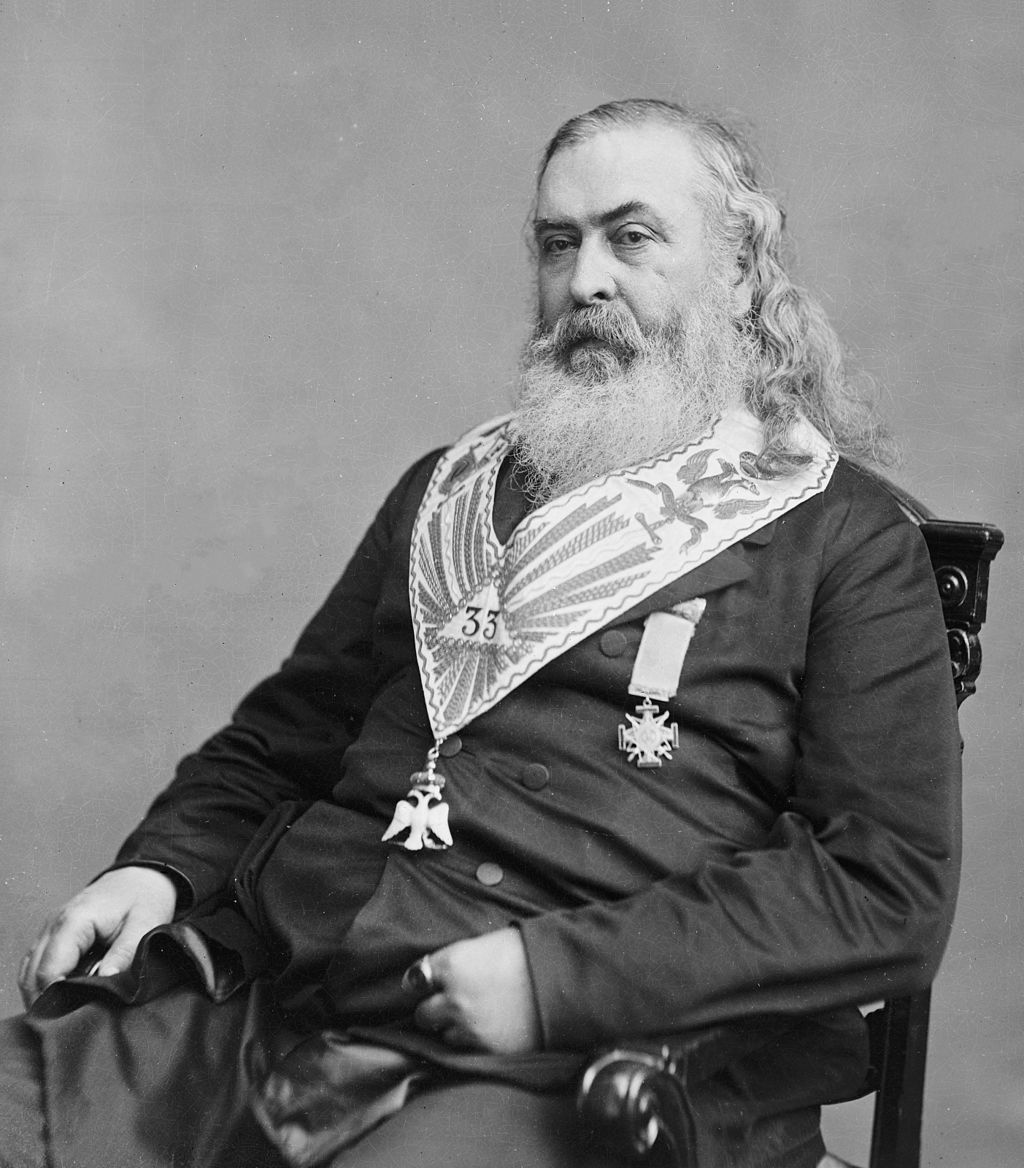
Pre-Civil War depictions of the Llano Estacado are rare, with pre-Texas Revolution versions even more scarce. Randolph Marcy’s Red River Expedition skirted the edges of the Llano Estacado in the early 1850s, while the Texan-Santa Fe Expedition of 1841 penetrated the escarpment and crossed it in a northwesterly track until ultimately being captured shortly after arriving in New Mexico. Of interest, a subsequent map showing this expedition’s route notes an even earlier trail used by Albert Pike during his 1832 trek across the Llano Estacado to points further in Texas. This foray is detailed in his 1834 book titled “Prose sketches and poems: written in the western country.”
A Boston and East Coast native born in 1809, Pike moved west first to St. Louis, Missouri in 1831 and then to New Mexico in 1832. When news reached Pike of a forming beaver trapping expedition in August 1832, he endeavored to join a group led by a man known only as “Mr. Campbell” at Taos before their departure down the Pecos River on September 6th, 1832. This group consisted mainly of Americans and Mexicans but a number of Native Americans and a lone Frenchman.
The party reached the Bosque Redondo area of the Pecos near modern Fort Sumner, New Mexico on September 15th making a post at a recently abandoned Indian camp which Pike believed to be of Comanche origin. In the shadows of the western Llano Estacado, Pike relayed its forbidding nature as “a boundless ocean,” and “some sort of terror…from which we could not escape alive.”
One of their intended destinations was known to Pike as “Cañon del Resgate” which conceivably matches the modern Ransom Canyon southeast of Lubbock, Texas. While still camping at the Bosque Redondo, a party of Spanish traders and potentially early Comancheros returning from the Llano Estacado reported on the tenuous state of affairs with the Comanche and Kiowa who were camped at Ransom Canyon. Following a resounding victory against an American wagon train, the Comanche and Kiowa would not welcome any Americans onto the Llano Estacado and would sacrifice not only intruding Americans but also their Comanche guide, Manuel, as well.
This ominous warning forced the American contingent to either return to Taos or embark on the expedition alone. Mr. Campbell elected to heed the foreboding advice, while Pike and 44 others chose to continue their journey to the Llano Estacado departing the Bosque Redondo on September 21st. They sought the well-worn trail that first pointed to the northeast and Taiban Spring before swinging southeast to ascend the escarpment onto the Llano Estacado.
Within one day, Pike noted the desperately dry conditions of the nearly level prairie as the party resorted to digging in the sand to satiate their thirst. After traveling an unknown number of miles and passing a small belt of sandhills, the group camped at a large lake, possibly either modern Tule or Tierra Blanca lakes. Over the course of the next few days, Pike detailed their southeasterly journey as they passed Portales Spring and moved east from there toward the heart of the Staked Plains.
On September 25th, Pike notes that the party traversed land near the large belt of sandhills and to the north of a large, dry salt lake, likely modern Arch Lake. With a new goal of killing buffalo, the group split into two parties as they tracked a small buffalo herd near this dry lake. After a long chase, they eventually killed three of these buffalo with Pike noting their surprising velocity and movement in his diary.
Two days later on September 27th, the expedition encountered a Comanche camp after the trail led them into the aforementioned sandhills to their north. After a period of debate, they decided to enter the camp and announce themselves as non-hostile. The band initially met the travelers with spears and bows, but they quickly changed attitudes when Pike parlayed with the leader threatening to shoot upon them if they were attacked. The leader then invited them to camp near their location, even inviting Pike and a few others to dine with him. Pike claims to have eaten more than four pounds of buffalo meat at this dinner.
Although they were invited to stay an additional day, the group unilaterally decided to depart the Comanche camp and continue towards Ransom Canyon. The leader informed them that they were nine day’s time from beaver trapping territory. They continued in a southeasterly direction eventually coming upon a broad and shallow valley at the end of September 28th. This was likely the ravine of the modern Blackwater Draw, a headwaters of the Ransom Canyon. They followed this valley throughout the day on the 29th and came upon another small Comanche camp that treated them in a friendly manner.
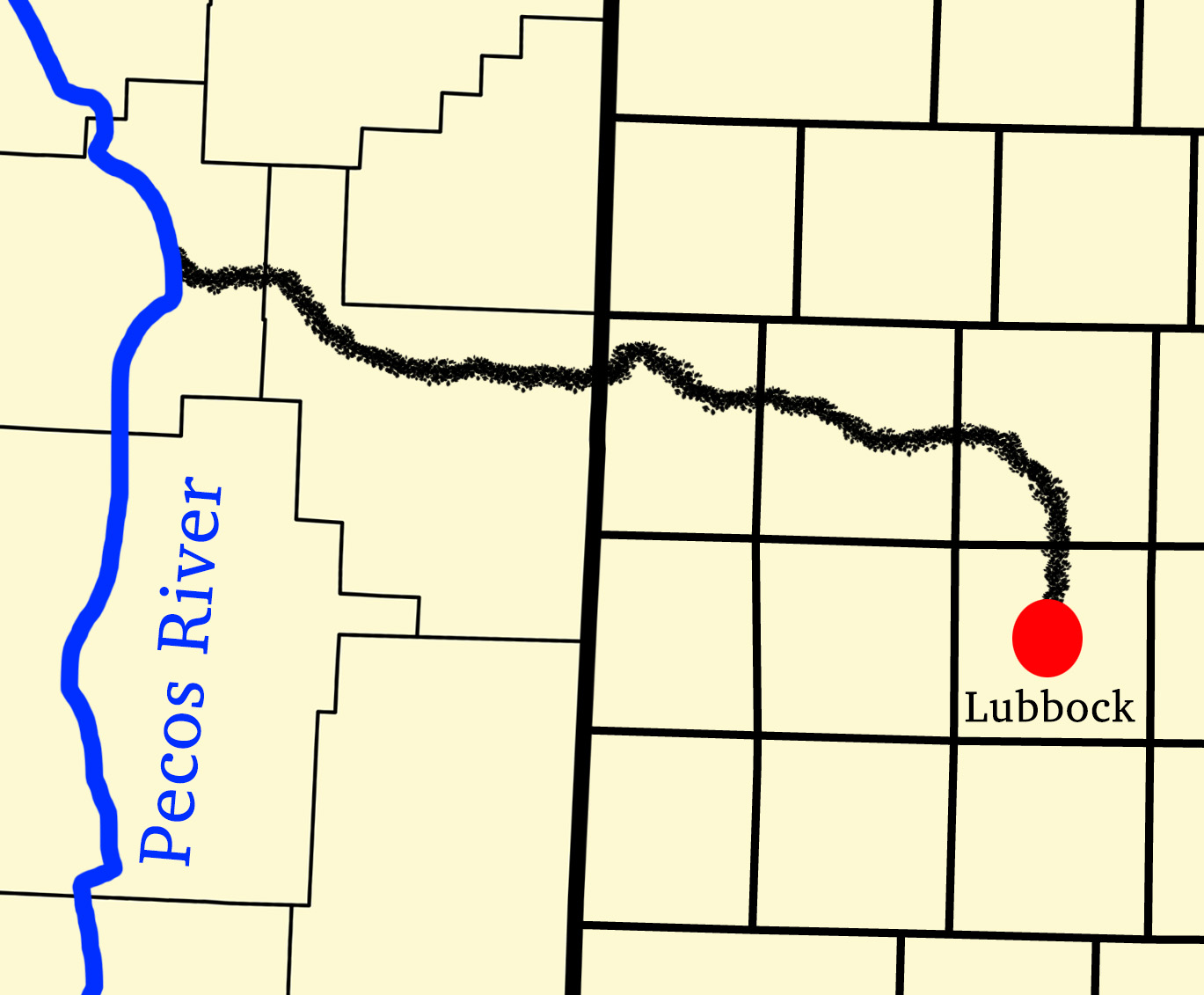
They followed this valley and the trail further south and east over the next few days before finding running water in the valley on October 3rd near modern Lubbock. This area was marked by a creek 20 yards wide, many small hills, and numerous mesquite bushes. It is unclear if the group located beaver in this vicinity, but their arrival here did mark the end of their successful trek across the Llano Estacado. From here, Pike and his crew continued their mission throughout the rolling plains of Texas before ultimately pursuing a trail to Fort Smith, Arkansas.