Lynn County and the lakes within its boundaries comprise one of the seminal locations on the Llano Estacado. Located in the northeastern quadrant of the county, Tahoka Lake and the springs surrounding it was a common watering hole for different populations throughout recorded history. Part of the lake’s attraction was that it was a freshwater lake, usually full year-round in an area where alkali lakes and playas annually dried up in the summer.
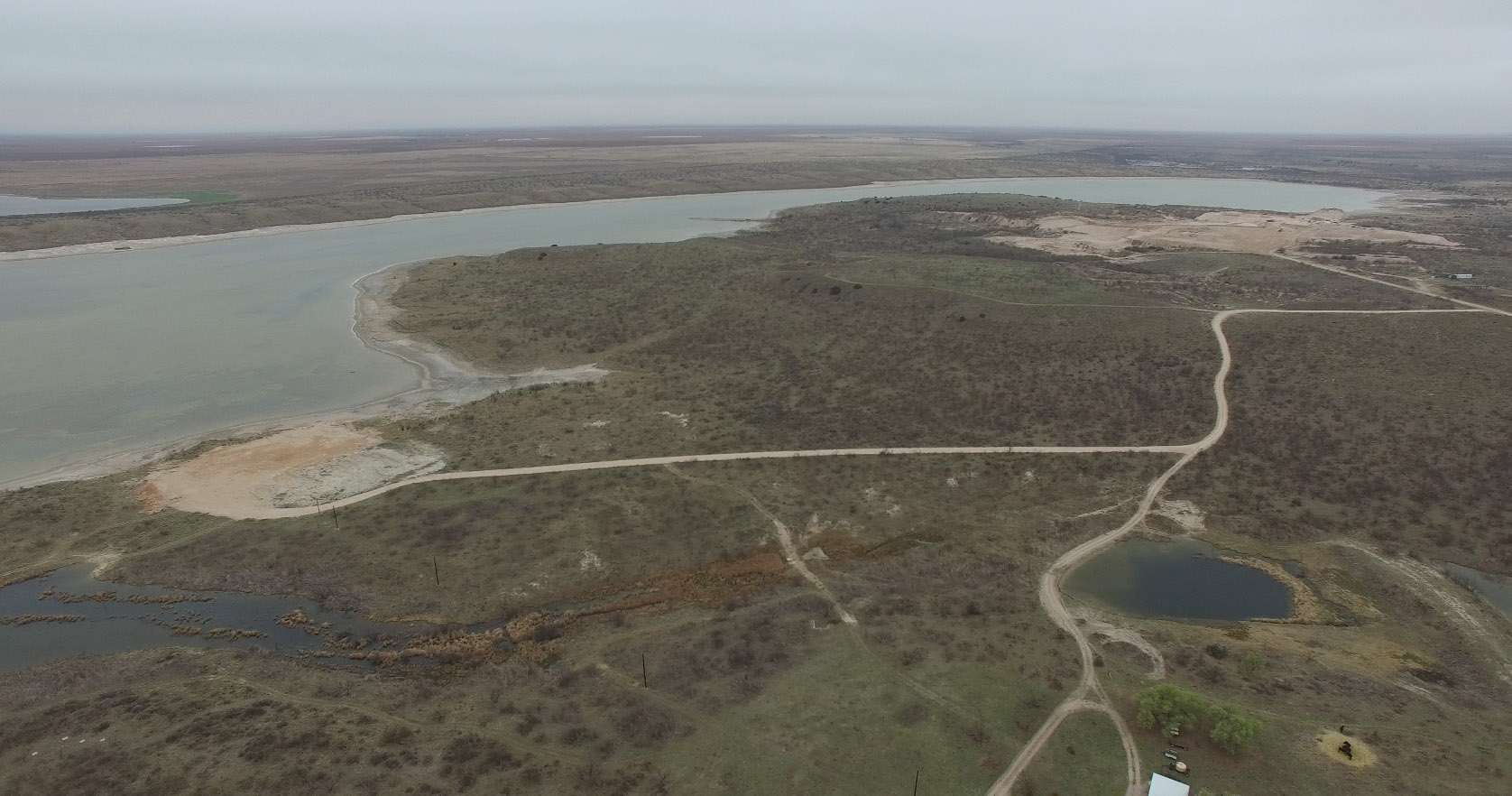
Photograph by Austin Allison
Although the exact origin of Tahoka Lake’s name is unclear, the last native inhabitants of the South Plains, the Comanche Indians, often visited the lake and may offer a clue about the name’s origin. Baldwin Parker, son of Quanah Parker, recalled hearing elders speaking about the lake and its fresh, drinkable water, and Colonel Martin Crimmings, a cavalryman who was in the area in the 1870s, produced research detailing Great Plains place names that corroborated this. The Comanche word tohoko reportedly means “fresh water.”
During the second half of the nineteenth century, a new phase of the lake’s history began. The advent of the Red River War, more than one hundred miles to the north of the lake, saw an increased effort by the U.S. military to force Comanche Indians onto the reservation at Fort Sill. Although Tahoka Lake was not the site of any major actions of the campaigns, some minor skirmishes did occur at or around the lake.
In November 1874, the Fourth Cavalry under the command of Colonel Ranald Mackenzie came upon and attacked a small group of Comanche Indians several miles west of the lake. They camped at the lake on the night of November 4 and the next day skirmished with a small group of warriors at the lake. The next year, a column of Shafter’s Tenth Cavalry passed by the lake. Eventually, this increased military presence in the area and the subsequent relocation of Comanche Indians to Fort Sill made settlement in the area possible.
Previously, as early as the 1850s, New Mexican sheepherders grazed and watered their flocks at Tahoka Lake, but permanent settlement around the lake and Lynn County did not occur until the late 1870s. In 1880, the national census recorded only eight residents living in Lynn County, and all at “Tehoca Lake.”
Ed Ryan raised sheep, and a family of seven by the name of the McDonnell raised cattle on the banks of Tahoka Lake. Over the next twenty years, the population of the county nearly doubled, and the 1900 census showed that the county was still dominated by the livestock raisers.
In the 1890s, Christopher Columbus (C.C.) Slaughter came into possession of more than 140,000 acres of land surrounding the lake, between the Currycomb Ranch to the east and the T-Bar Ranch to the west. The ranch became known as the Tahoka Lake Ranch. From 1897 through 1907, Slaughter’s foreman and manager, Jack Alley, had his headquarters at Tahoka Lake.
The topography surrounding the lake and year-round access to water made the site attractive to stock raisers. Like similar lakes in the county and region, Tahoka Lake had the capability to support, at least temporarily, large cattle operations. In one year alone, Slaughter’s Tahoka Lake Ranch delivered 2,400 head of cattle.
The ranch, however, was short-lived. In 1902, a ruling by the Supreme Court of Texas severely limited Slaughter’s ability to keep re-leasing the land from the State of Texas. Therefore, as his leases expired, he strategically informed his acquaintances that the land was going to be sold by the state. He hoped to hinder homesteaders by helping his friends move onto land he once controlled. By these means, Jack Alley acquired most of the ranch land surrounding the lake.
Tahoka Lake also lends its name to a flowering plant common on the southern Great Plains. Machaeranthera tanacetifolia, the Tahoka Daisy, or prairie aster, was first noticed blooming along the shores of the lake by Effie Alley, the wife of Jack Alley. A May 28, 1970 issue of the Lynn County News related that the lilac-petaled flower was first noticed at the lake around 1898 but received its name when Mrs. W.A. Myrick Sr. of Lubbock took the flower to Lubbock and dubbed the plant the Tahoka Daisy. You can read more about it later in this book, in Part VIII.
Today, conservation efforts exist to preserve the Tahoka Lake pasture and the history around the lake. Texas Tech University has conducted archaeological studies of specific sites around the lake, including remnants of sheepherder fences located near the lake. The land immediately surrounding the lake has never been plowed and still offers a unique look into native plant life in the region.